42 Kilometers
Key Takeaway
The finish line only counts the crossing, not how many times you almost quit. That is true for marathons and for startups.
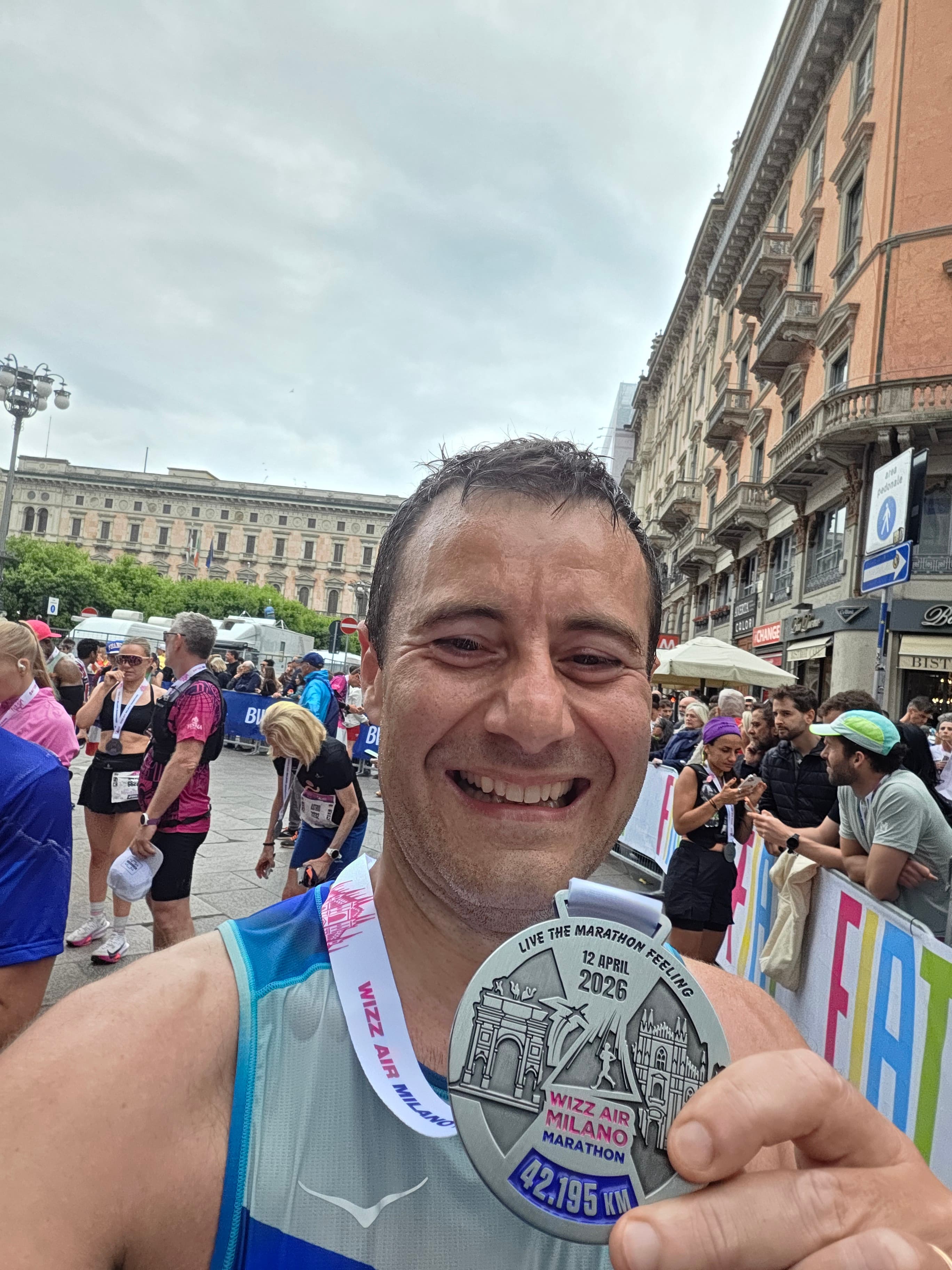
I crossed the finish line of the Wizz Air Milano Marathon yesterday. April 12. 42.195 kilometers through the heart of Milan, from Corso Sempione to Piazza del Duomo, with a medal around my neck.
I almost didn't start.
The Training Was Supposed to Be the Hard Part
When I signed up, I had a plan. Structured blocks. Progressive mileage. Consistent effort. It looked good on paper.
Reality had other ideas.
There were months where I ran half of what I'd scheduled. Long runs that left me destroyed, convinced I'd made a mistake signing up. I said it out loud more than once: "I'm not doing this." Then I showed up the next session and tried a different approach.
That cycle repeated more times than I want to admit across 20 weeks of preparation.
Being Coachable Is Harder Than It Sounds
When I started the training plan, I knew nothing. Not just "not much." Actually nothing.
I didn't know what Zone 2 training was. I didn't know why easy runs had to feel embarrassingly slow. I didn't understand fueling: what to eat before a long run, how to take gels on the move, why bonking at kilometer 28 isn't a fitness problem but a nutrition one. I thought running harder was always better. I was wrong about almost everything.
Learning these things meant accepting that my instincts were useless. Every time I thought I knew what I was doing, I was probably the person who needed to stop and listen.
The first time I ran a proper Zone 2 session, 90 minutes at a pace that felt like a brisk walk, it felt ridiculous. It also stopped the knee pain I'd had for three months. The first time I fueled properly on a long run, gels every 45 minutes starting from kilometer 10, I finished strong instead of dragging myself home.
Being coachable isn't about being humble. It's about being honest that the gap between what you think you know and what's actually true is almost always larger than you expect.
Race Day
The weather was grey and cool. Good running weather.
The first 20 kilometers felt like I'd planned them. Controlled pace, steady breathing, still feeling good when people around me started struggling. I'd done the work. The work was paying off.
Then kilometer 30 arrived.
Everything hurt. My legs had a different opinion about finishing than my brain did. The gap between "I want to finish" and "my body wants to stop" opened into something I hadn't fully prepared for.
I didn't stop. I slowed down. I recalculated. I told myself: get to the next kilometer marker. Not the finish line. Just the next marker.
I ran the last 12 kilometers one kilometer at a time.
The Parallel I Can't Stop Thinking About
Building LeanAI Studio over the last six weeks has felt structurally identical to training for this marathon.
There are weeks where validation results are bad. No responses. Wrong assumptions. A bet I was convinced would land that falls completely flat. The data tells you something isn't working. You adjust. You try a different approach. You don't let a hard week become the story.
The coachable moments are the same. I've gotten feedback from founders who've done this before that directly contradicted what I thought I knew. My first instinct was to defend my approach. My second instinct, once I actually tested their suggestion, was to recognize how much time I'd wasted defending the wrong thing.
The "next kilometer marker" strategy works here too. On the hardest days, I don't look at the full roadmap. I look at the next task. Get the next outreach sequence out. Get the next validation bet scored. Move one thing forward. Don't manage the distance. Manage the next step.
And the recovery from a bad stretch is the same in both. A bad training block doesn't erase the fitness you built. A bad validation week doesn't erase the process you've built. You log it, adjust, and go again.
What the Medal Actually Means
I'm not writing this to share a celebration photo. I'm writing it because crossing that finish line gave me something I didn't expect: proof of process.
Not proof that I'm athletic. I'm not particularly athletic. Proof that the same approach that builds a company from scratch also gets you across 42 kilometers. Consistency over motivation. Coachable over correct. Recover from the bad stretches instead of letting them define the story.
The finish line doesn't care how many times you almost quit during training. It only counts the crossing.